Understanding PTSD and Trauma-Related Conditions in Children
A family-friendly look at causes, symptoms, and support
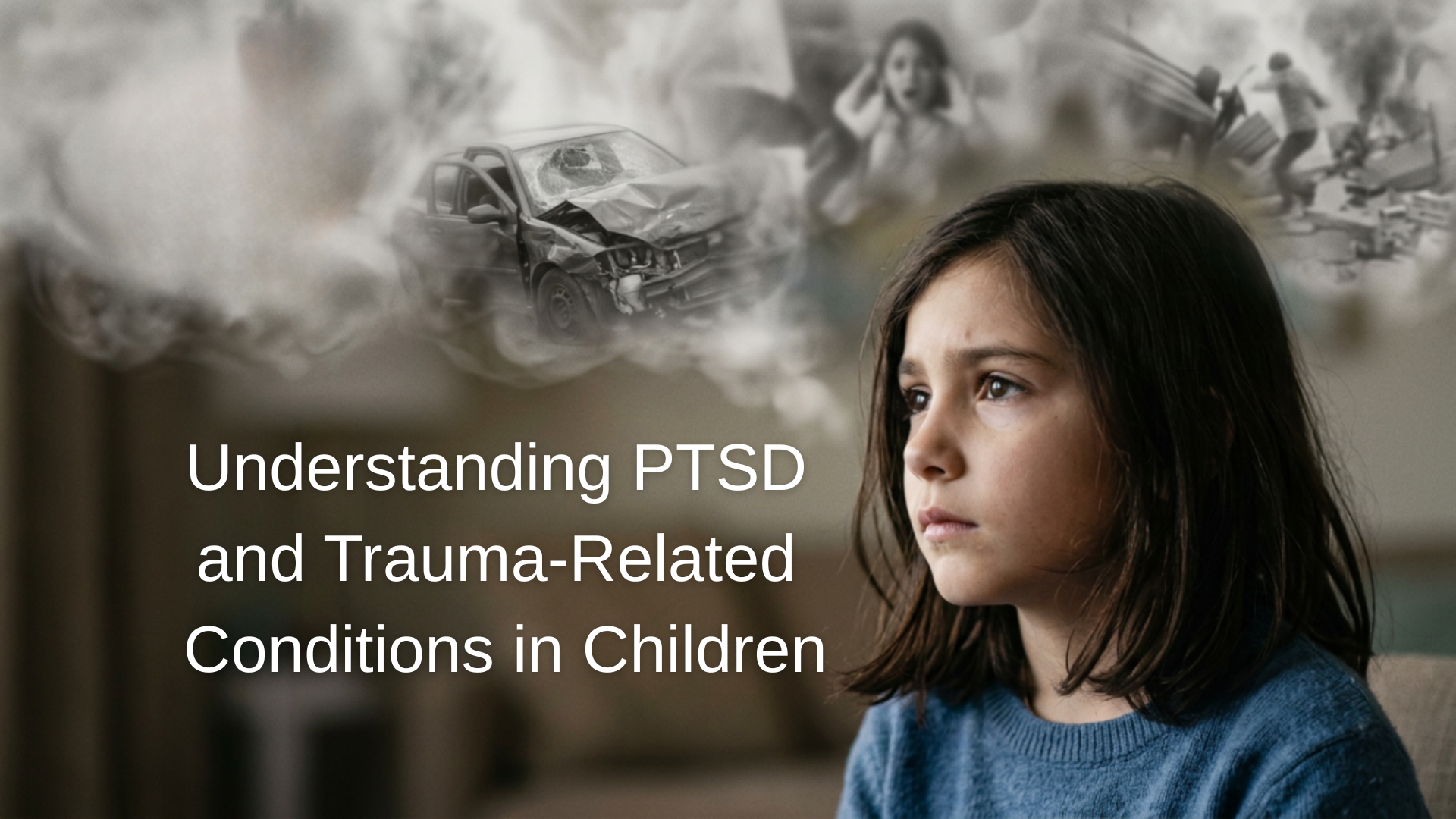
When people hear the word trauma, they may think of abuse, neglect, or violence. While those experiences can cause trauma, they are not the only causes. Children can also be deeply affected by other hard or overwhelming events. A child may struggle after a car accident, a serious illness, a painful medical experience, the death of someone close, a natural disaster, a sudden move, family separation, or watching someone they love go through something frightening.
Post-Traumatic Stress Disorder, often called PTSD, can happen when a child has trouble recovering after a traumatic experience. The child may continue to feel scared, unsafe, or upset even after the danger or event has passed. PTSD is not a sign that a child is weak. It is a mental health condition that can happen when the brain and body stay stuck in survival mode.
Children do not always explain trauma with words. Instead, they may show it through behavior. A child may have nightmares, trouble sleeping, stomachaches, headaches, anger, crying spells, clinginess, or trouble focusing. Some children may avoid places, people, sounds, smells, or activities that remind them of what happened. Others may seem quiet, withdrawn, nervous, or always on alert. Older children and teens may act angry, disrespectful, risky, or shut down, even when they are really struggling inside.
PTSD can also happen after medical trauma. This may include a serious diagnosis, surgery, repeated hospital stays, painful treatments, emergency care, or watching a parent or sibling go through a medical crisis. A child may not fully understand what is happening, but their body may remember the fear, pain, or loss of control. Afterward, they may become afraid of doctors, hospitals, needles, or being separated from a caregiver.
Grief and major loss can also affect a child’s mental health. The death of a parent, sibling, grandparent, friend, or caregiver can leave a child feeling unsafe or confused. Some children may worry that other people they love will disappear too. They may ask repeated questions, become clingy, act younger than their age, or have big emotions that seem to come out of nowhere.
Accidents and disasters can also lead to trauma-related symptoms. A child who has been in a car crash, house fire, flood, tornado, or other frightening event may have trouble feeling safe again. Even if the child was not badly hurt, the fear from the event can stay with them.
It is also important to understand that PTSD is not the only possible diagnosis after a difficult event. Some children may be diagnosed with anxiety, depression, adjustment disorder, acute stress disorder, or another trauma-related condition. Some children may already have conditions such as ADHD, autism, or a learning disability, and trauma can make their symptoms harder to manage. For example, a child who already has trouble with change may struggle even more after a medical emergency, death in the family, or sudden change at home.
Not every child who goes through something hard will develop PTSD. Some children recover well with support, routine, and caring adults. Others need extra help from a counselor, doctor, school team, or mental health provider. A child’s response to trauma can be affected by how parents, caregivers, teachers, and other trusted adults respond after the event.
Families should watch for changes in sleep, mood, behavior, school performance, eating habits, friendships, or fearfulness. If symptoms last for several weeks, get worse, or affect daily life, it may be time to ask for help. A doctor or mental health professional can help decide whether the child may have PTSD, anxiety, depression, adjustment disorder, or another condition.
Healing is possible. Children need safety, patience, routine, and support. They need adults who understand that behavior is often communication. When a child is acting out, shutting down, or struggling, they may be showing that something inside feels too big to handle alone.
Advocacy Links can help families find the right resources and support. They can help families navigate challenges, connect with community services, and understand where to turn next. With the right help, children and families can move toward healing, stability, and hope.
Note: This article is for general education and is not a diagnosis or medical advice. Families should speak with a doctor or licensed mental health professional if they are concerned about a child.