
Service Dogs: More Than Just a Helping Paw
When most people think of a service dog, they picture a dog helping someone who is blind cross the street or safely walk through a store. But service dogs do so much more! These amazing animals are trained to help people with many different disabilities, including physical limitations, medical conditions, and mental health challenges.
Some service dogs help people with everyday tasks, such as picking up dropped items, opening doors, or providing balance assistance. Others are trained to recognize certain medical changes or help someone experiencing symptoms of PTSD, panic attacks, or sensory overload.
Sometimes a Service Dog’s Job Is Simply to Stay Close
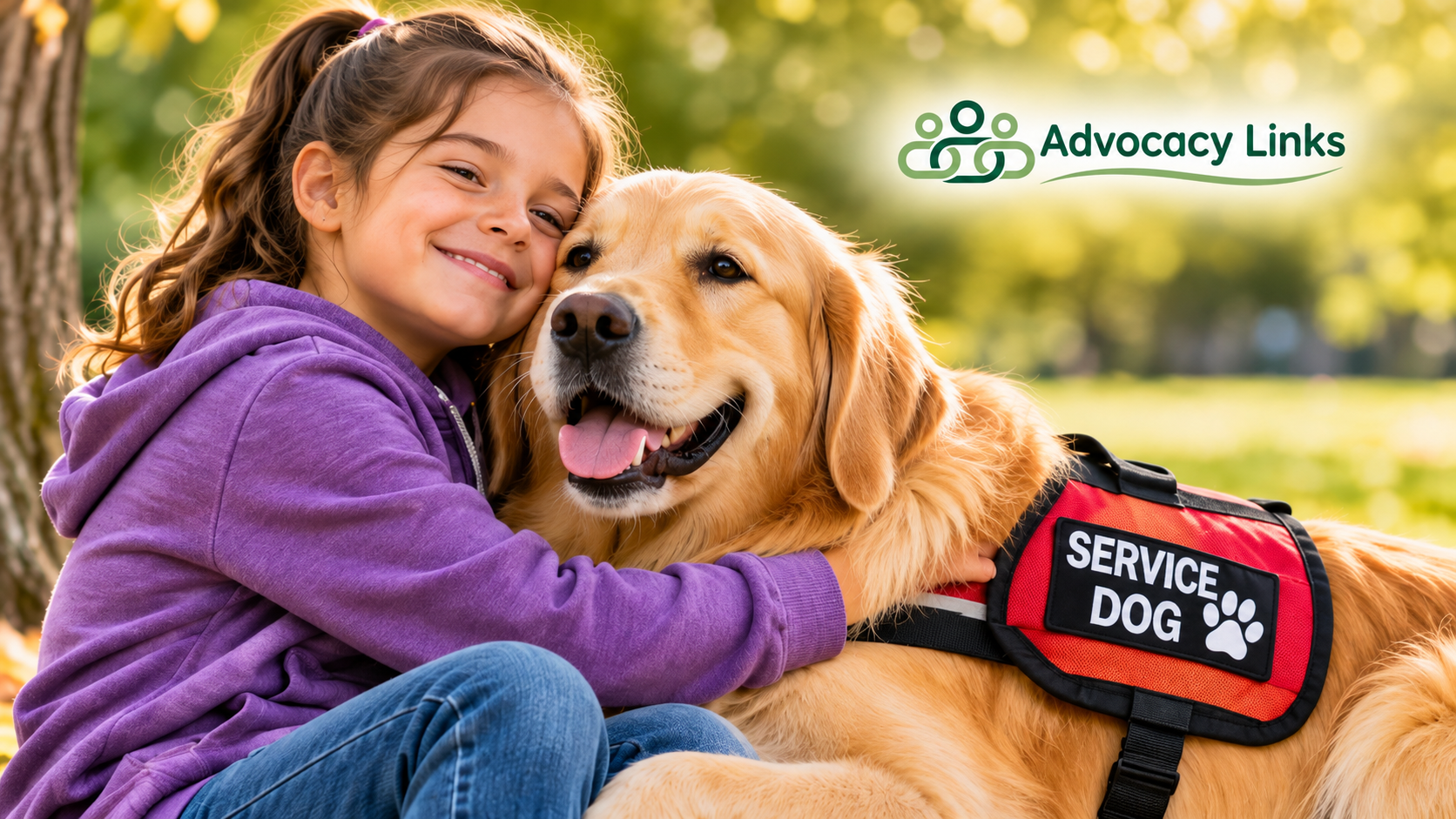
You may see someone sitting or lying on the floor in a public place with their service dog resting against them. While it may look like the dog is simply cuddling, it could actually be performing an important trained task.
One example is Deep Pressure Therapy (DPT). This is when a service dog applies gentle but firm pressure by resting part of its body across its handler’s legs or lap. This pressure may help some people feel more grounded during anxiety, sensory overload, or PTSD symptoms.
Another approach, sometimes called Light Pressure Therapy (LPT), involves lighter contact, such as leaning against the person or resting its head on their lap.
These trained responses can help some people manage difficult moments, even when they happen in public.
How Should You Act Around a Service Dog?
Service dogs need to concentrate on their work, even when they appear to be resting. If you see one helping someone, remember these simple guidelines:
– Give them space. Avoid crowding the person or their dog.
– Don’t distract the dog. Avoid petting, calling, or offering treats without permission.
– Respect their privacy. Not all disabilities are visible, and someone may be experiencing a difficult medical or emotional moment.
– Offer help when appropriate. If someone appears to need assistance, calmly ask if they are okay. If there is a serious emergency, contact emergency services.
Small Dogs, Big Dogs, Amazing Work
Service dogs come in different breeds and sizes. What matters most is their training and ability to perform tasks that help their handler.
Whether guiding someone with vision loss, assisting a person with limited mobility, or responding to a mental health episode, these dogs can make an incredible difference in someone’s daily life.
The next time you see a service dog, remember that its most important work may not always be obvious. A dog resting quietly beside its handler may be providing exactly the help that person needs.
How Advocacy Links Helps Families
At Advocacy Links, we understand that children and families face many challenges, including mental health needs and disabilities. While service dogs are one example of the support available to people with disabilities, finding the right resources and services is important.
Advocacy Links helps families connect with resources and services that meet their individual needs..