
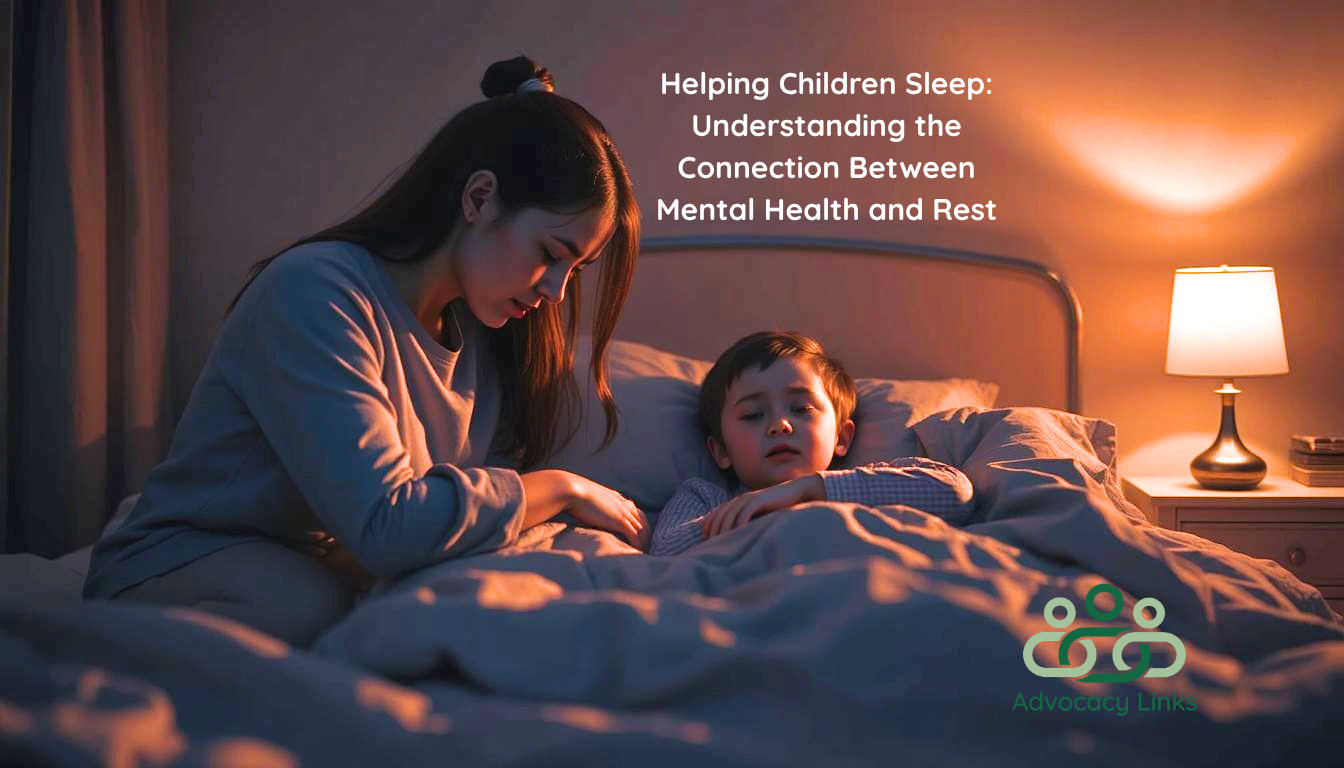
Helping Children Sleep: Understanding the Connection Between Mental Health and Rest
Sleep is one of the most important parts of a child’s health—but for many children, especially those facing mental health challenges, getting good sleep is not easy. Children who have experienced trauma, or who have developmental differences like autism or Down syndrome, often struggle with sleep in ways that can affect their whole family.
Understanding why this happens, and what can help, can make a big difference.
Why Mental Health and Sleep Are Connected
Child’s mind and body are closely linked. When a child is dealing with anxiety, stress, or past trauma, their brain may stay on high alert, even at bedtime. This can make it hard to relax, fall asleep, or stay asleep.
Children who have experienced trauma may feel unsafe when the world becomes quiet at night. They may have nightmares, fears, or strong emotions that come up when they try to sleep.
Children with developmental differences may face different challenges. For example:
– Children with autism may be sensitive to light, sound, or changes in routine.
– Children with Down syndrome may have physical factors that affect breathing and sleep.
– Some children may have difficulty understanding bedtime routines or calming their thoughts.
No matter the cause, sleep struggles are common, and they are not the child’s fault.
How Sleep Challenges Affect Children and Families
When a child doesn’t get enough sleep, it can affect many parts of their life. They may:
– Have trouble focusing at school.
– Feel more emotional or easily overwhelmed.
– Struggle with behavior or communication.
– Feel tired during the day but still unable to rest at night.
For families, sleep challenges can lead to exhaustion, stress, and feelings of helplessness. Parents and caregivers may feel like they are always “on alert,” especially if their child wakes often during the night.
This is why support and understanding are so important.
Practical Ways to Help Your Child Sleep Better.
There is no one-size-fits-all solution, but small changes can make a big difference over time. The goal is to help your child feel safe, calm, and supported.
Create a simple, consistent routine
Children feel safer when they know what to expect. Try to keep bedtime steps the same each night, like bath, pajamas, a quiet activity, then bed.
Make the sleep space feel safe
Some children need extra comfort. This might include a nightlight, a favorite blanket, or calming sounds like soft music or white noise.
Watch for sensory needs
For children with autism or sensory sensitivities, consider:
– Soft lighting instead of bright lights.
– Comfortable clothing and bedding.
– Reducing noise or using calming sounds.
Talk about worries during the day
Bedtime is not always the best time to process big feelings. Try to talk earlier in the day so your child doesn’t carry those worries into the night.
Limit screens before bed
Screens can make it harder for the brain to relax. Try to turn off devices at least 30–60 minutes before bedtime.
Use calming activities
Reading a book, gentle stretching, or deep breathing can help your child’s body slow down.
Be patient and consistent
Progress may be slow, especially for children who have experienced trauma or ongoing challenges. Small improvements still matter.
When to Seek Extra Support
Sometimes, sleep challenges need more than home strategies. Talking to a doctor, therapist, or sleep specialist can help you understand what your child needs.
At Advocacy Links, they focus on connecting people to the right resources and helping families navigate challenges finding resources and help they need, including mental health and sleep support. They work with Indiana Wraparound and other community services to help families build a plan that fits their child’s unique needs.
You Are Not Alone
If your child struggles with sleep, it does not mean you are doing something wrong. Many families are going through the same thing, and help is available.
With the right support, understanding, and small steps forward, children can begin to feel safer, sleep better, and grow stronger each day.
And when children sleep better, the whole family can begin to rest, too.