When Depression Comes Back in Children
Understanding Major Depressive Disorder, Recurrent, Severe, Without Psychotic Features
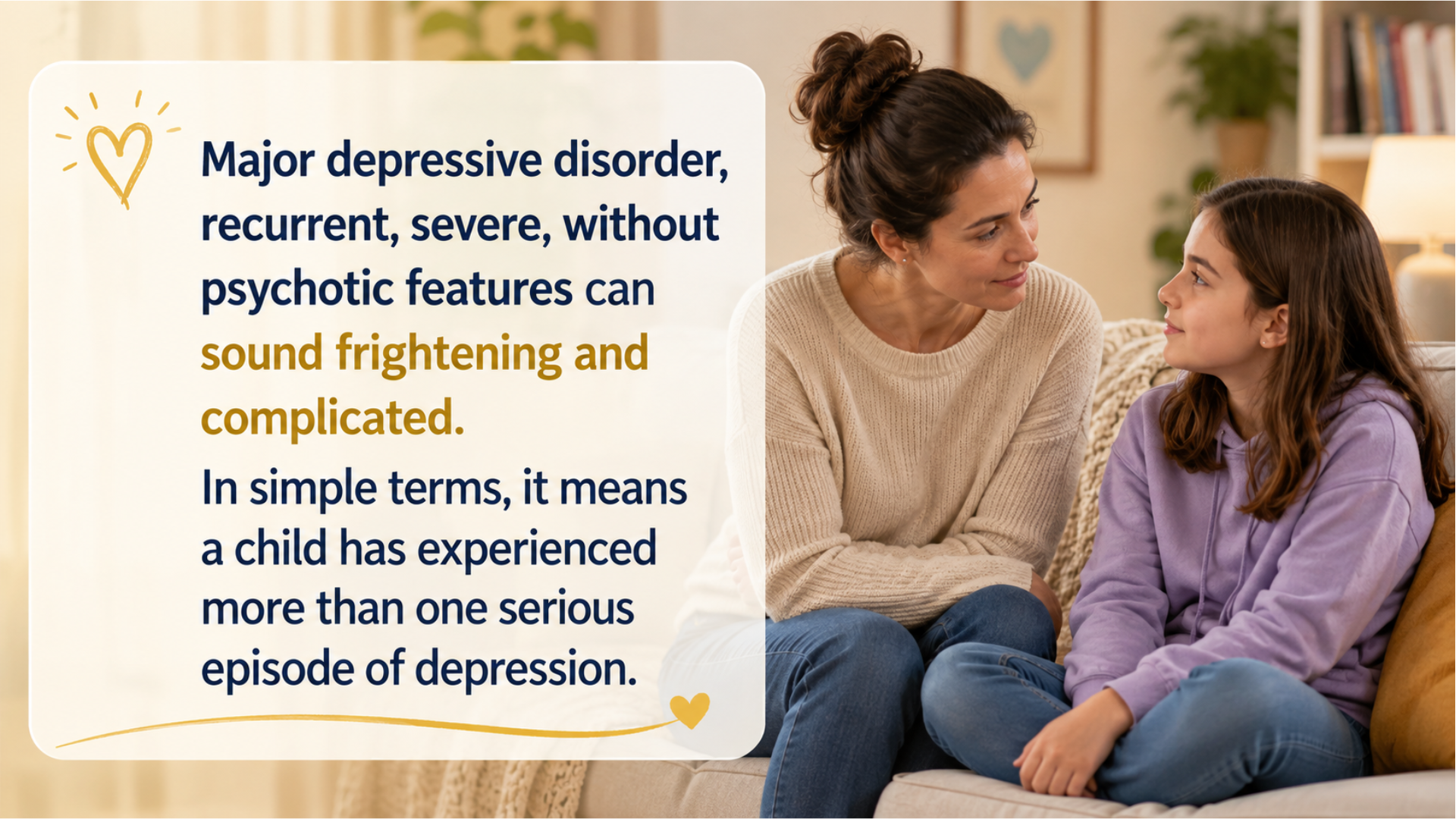
A diagnosis such as “major depressive disorder, recurrent, severe, without psychotic features” can sound frightening and complicated. In simple terms, it means a child has experienced more than one serious episode of depression. The symptoms are strong enough to greatly affect daily life, but the child is not experiencing psychotic symptoms such as hallucinations or delusions.
What does “recurrent” mean?
Recurrent depression does not simply mean that a child has a bad day or seems sad again. It means depression has occurred in separate episodes. A child may improve for a period of time and begin acting more like themselves, but later the depression symptoms return. Parents are often the first people to notice that an old pattern is starting again.
Signs depression may be returning
- Irritability, sadness, anger, or frequent crying that continues rather than passing quickly
- Loss of interest in friends, hobbies, sports, games, or activities the child usually enjoys
- Sleeping much more or less than usual, or having a noticeable change in appetite
- Low energy, poor motivation, difficulty concentrating, or a drop in school participation
- Pulling away from family and friends or spending much more time alone
- Feelings of hopelessness, worthlessness, guilt, or repeatedly saying that nothing will get better
- Talking or writing about death, suicide, self-harm, or not wanting to be here
Look for the pattern, not just one sign
One change by itself does not necessarily mean depression has returned. What matters is the pattern: several symptoms coming back together, happening most days, lasting about two weeks or longer, and beginning to interfere with school, relationships, sleep, routines, or everyday activities. Children may also show depression as irritability or anger rather than obvious sadness.
Depression can return, but recognizing the warning signs early can help families reconnect a child with support and treatment sooner.
Sources: National Institute of Mental Health (NIMH) and MedlinePlus.
Advocacy Links helps families connect with information, services, and resources for children with disabilities and mental health needs.