
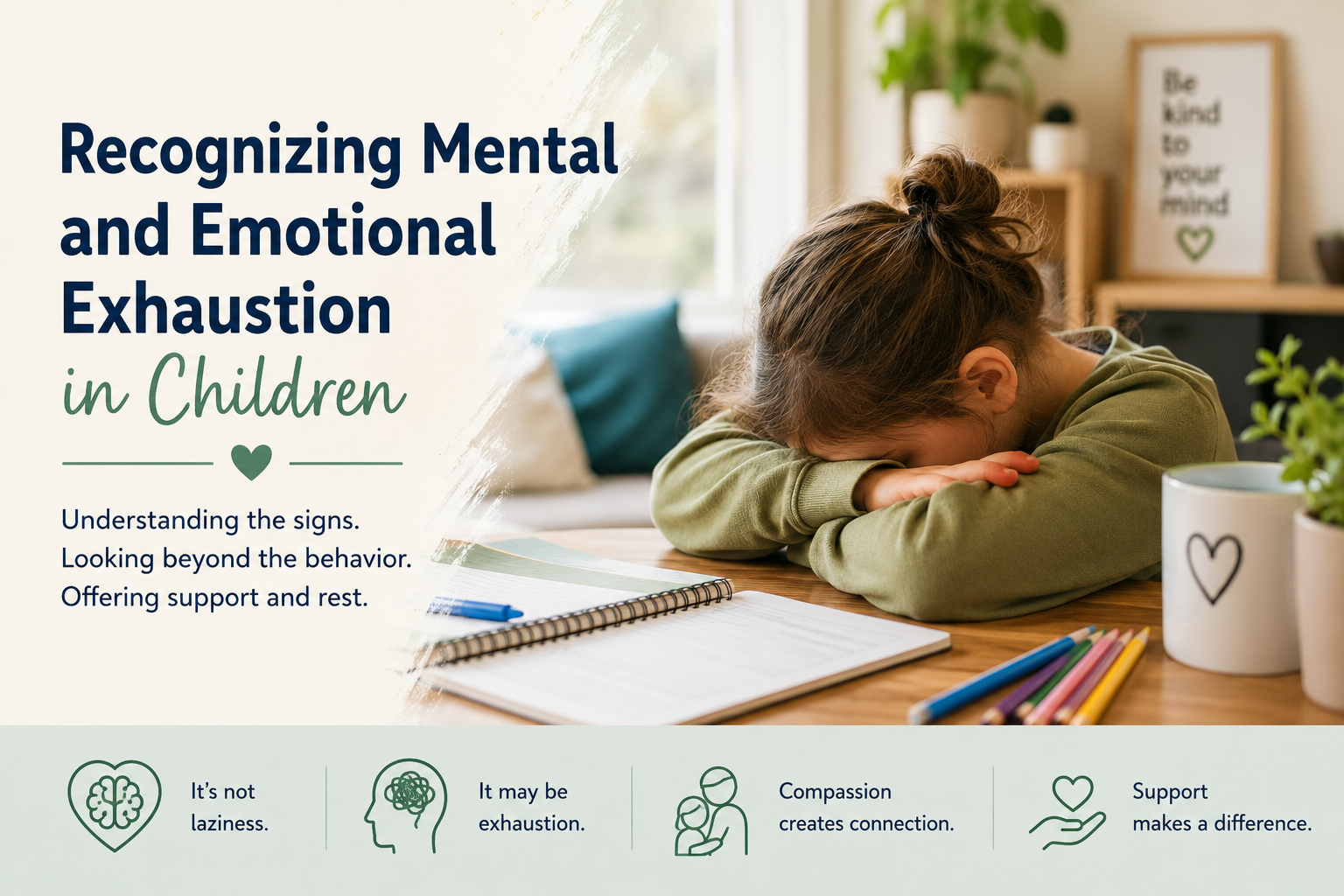
Recognizing Mental and Emotional Exhaustion in Children
A child who refuses to do homework, becomes upset over a small request, or says, “I can’t,” may be called lazy or uncooperative. However, the child may actually be mentally and emotionally exhausted.
Children can become overloaded by schoolwork, social situations, changes in routine, family stress, sensory challenges, or the effort of managing a disability or mental health condition. Some children work hard all day to follow directions, control their emotions, communicate, and fit in. By the time they get home, they may have very little energy left.
What Exhaustion May Look Like
Mental and emotional exhaustion does not always look like sleepiness. A child may:
- Become irritated or angry more easily
- Cry or become upset over small problems
- Refuse homework, chores, or activities
- Have trouble concentrating or making decisions
- Forget directions or lose belongings
- Withdraw from family and friends
- Lose interest in activities they usually enjoy
- Complain about headaches or stomachaches
- Sleep too much, too little, or have trouble falling asleep
- Have more meltdowns or emotional shutdowns
Stress and mental health concerns can affect a child’s sleep, concentration, behavior, energy, and interest in activities.
Look at What Happened Before the Behavior
Instead of asking, “Why are you being difficult?” try asking, “What has your day been like?”
Consider whether the child:
- Had a busy or stressful school day
- Was around loud noises, crowds, or strong sensory input
- Had several tests, assignments, or appointments
- Was worried about friends, teachers, or bullying
- Had to manage strong feelings for a long time
- Did not get enough sleep, food, movement, or quiet time
Behavior is often a form of communication. Refusal may mean, “I do not have enough energy to do one more thing.” Anger may mean, “Everything feels too hard right now.” Withdrawal may mean, “I need a break.”
How Parents and Caregivers Can Help
Start by helping the child feel safe and understood. You might say, “It looks like today took a lot out of you,” or, “Let’s take a break and figure this out together.”
Give the child time to rest before asking questions or adding more demands. A snack, a drink, quiet time, gentle movement, or time with a favorite activity may help the child reset.
Large tasks can also be divided into smaller steps. Instead of saying, “Finish all your homework,” begin with, “Let’s work for ten minutes and then take a short break.”
Try to notice patterns. Keep track of when the behavior happens, what happened beforehand, and what helped the child recover. This information can be useful when speaking with teachers, counselors, doctors, or other members of the child’s support team.
When to Ask for More Support
Occasional tiredness and frustration are normal. However, talk with the child’s doctor or mental health professional when changes last for several weeks, become more severe, or interfere with school, home life, friendships, sleep, or daily activities.
A child who is overloaded does not need to be shamed or punished for struggling. They need adults who will pause, look beyond the behavior, and help them find the support and rest they need.
Advocacy Links helps families connect with information, services, and resources for children with disabilities and mental health needs.