
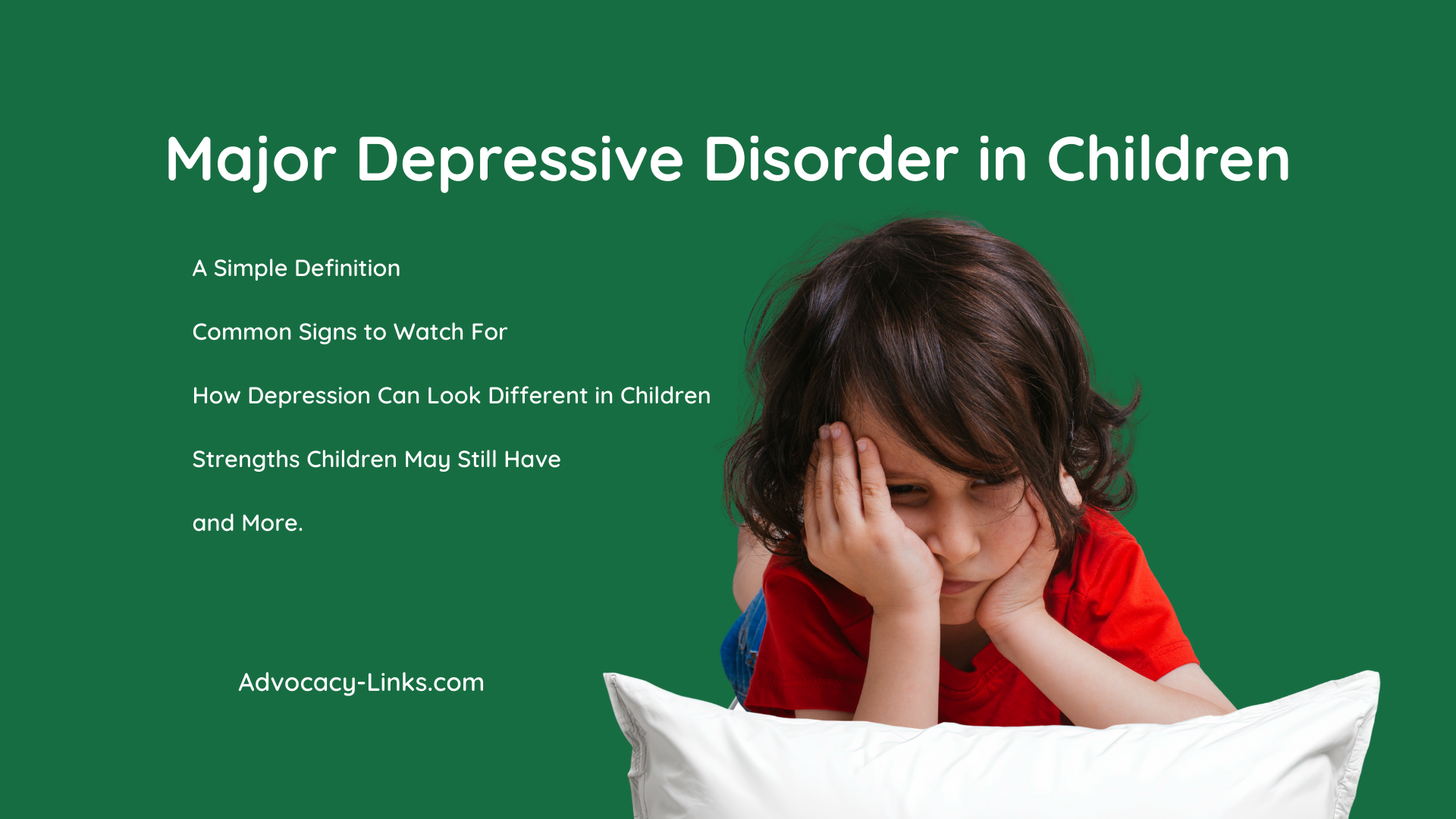
Major Depressive Disorder in Children
Major Depressive Disorder (often called “major depression”) is more than a bad day or a short sad mood. It is a health condition that can cause ongoing sadness, emptiness, or irritability for at least two weeks. It can affect how a child thinks, sleeps, learns, and connects with others. When depression is present, everyday life can feel much harder than it used to.
A Simple Definition
Major depression in children means their mood and energy are stuck in a low place for a period of time. A child may lose interest in things they used to enjoy, or they may feel like they cannot keep up with normal routines. This is not laziness, attitude, or a “phase” a child can simply snap out of. Depression is real, and with the right support, many children do get better.
Common Signs to Watch For
Depression can look different from one child to another. Some children seem sad and tearful, but many look more angry, moody, or easily irritated. You might notice your child pulling away from friends and family, losing interest in hobbies, or seeming “flat” and less emotionally present.
Depression can also show up in the body. Some children sleep too much or have trouble sleeping. Some eat much less or much more than usual. Many feel tired, move more slowly, or complain of headaches and stomachaches. School can become harder too, with more trouble focusing, remembering, or finishing work. You may also hear more negative statements, like “I’m not good at anything,” or “Nothing matters.”
How Depression Can Look Different in Children
Children do not always have the words to explain what they feel. A child might say, “I’m tired,” “I feel sick,” or “I hate everything,” instead of saying they feel depressed. Some kids become clingy or more anxious, while others want to be alone all the time.
It can also change depending on where they are. Some children hold it together at school and then fall apart at home. Others struggle most in the morning, or get overwhelmed after a busy day. If your child’s mood and behavior are very different than what you know is normal for them, that change matters, even if they can’t fully explain it.
Strengths Children May Still Have
A child can be depressed and still have strengths and good qualities. Many children are caring, sensitive, and deeply thoughtful. Some are creative and express feelings through music, art, writing, or building things. Some show quiet bravery by getting through the day, even when it feels heavy.
Noticing strengths does not erase depression, but it helps children remember they are more than what they feel right now. It also helps caregivers hold onto hope and keep supporting progress, one small step at a time.
Common Challenges Families May Face
Depression can make routines feel overwhelming. Getting out of bed, taking a shower, doing homework, or joining family time can feel like too much. Children may seem unmotivated or “checked out,” but often they are struggling inside and don’t know how to ask for help.
Depression can also affect the whole household. Caregivers may feel worried, exhausted, or unsure what to say. Siblings may feel confused. Families sometimes argue more because everyone is stressed. If this is happening in your home, it does not mean you are doing something wrong. It means your child needs support, and your family deserves support too.
Supports That Can Help
Many children improve with the right plan. A good starting point is talking with your child’s doctor, who can check for medical issues that may affect mood and help guide next steps. Counseling can help children understand feelings, manage negative thoughts, and build coping skills. Family counseling can also help improve communication and reduce stress at home.
School support can make a big difference. A school counselor, social worker, or trusted teacher can help watch for warning signs and create simple supports during the school day. For some children, a provider may also recommend medication. This is a personal decision that should be discussed carefully with qualified professionals, based on your child’s needs.
Tips for Caregivers
When your child is struggling, calm support matters more than perfect words. Try statements like, “I’ve noticed things have been hard lately, and I’m here with you.” If your child opens up, listen without rushing to fix it. Feeling heard and believed can be a powerful first step.
Keeping life predictable can also help. Simple routines for sleep, meals, and schoolwork can reduce stress. When your child is overwhelmed, focus on small goals instead of big ones. Praise effort, not just results. If your child gets out of bed, goes to school for part of the day, or talks about feelings for a few minutes, those are real wins.
It’s also okay to admit this is hard. Caregivers need support too. Reaching out for guidance or someone to talk to can help you stay steady and avoid burnout.
When to Seek Help
If changes in mood or behavior last more than two weeks, or if depression seems to be affecting school, friendships, or family life, it is time to reach out. Seek help sooner if symptoms are intense, if your child seems hopeless, or if you are worried about safety, you can call or text 988 for the Suicide & Crisis Lifeline. If there is immediate danger, call 911 right away.
How Advocacy Links Can Help
Advocacy Links does not provide therapy directly, but they can help families find the right resources and next steps. They can help you navigate options, connect with mental health providers and community supports, and understand what services may be available through schools and Indiana Wraparound. If you feel stuck, overwhelmed, or unsure where to start, they can help you take the next step with guidance and support.