
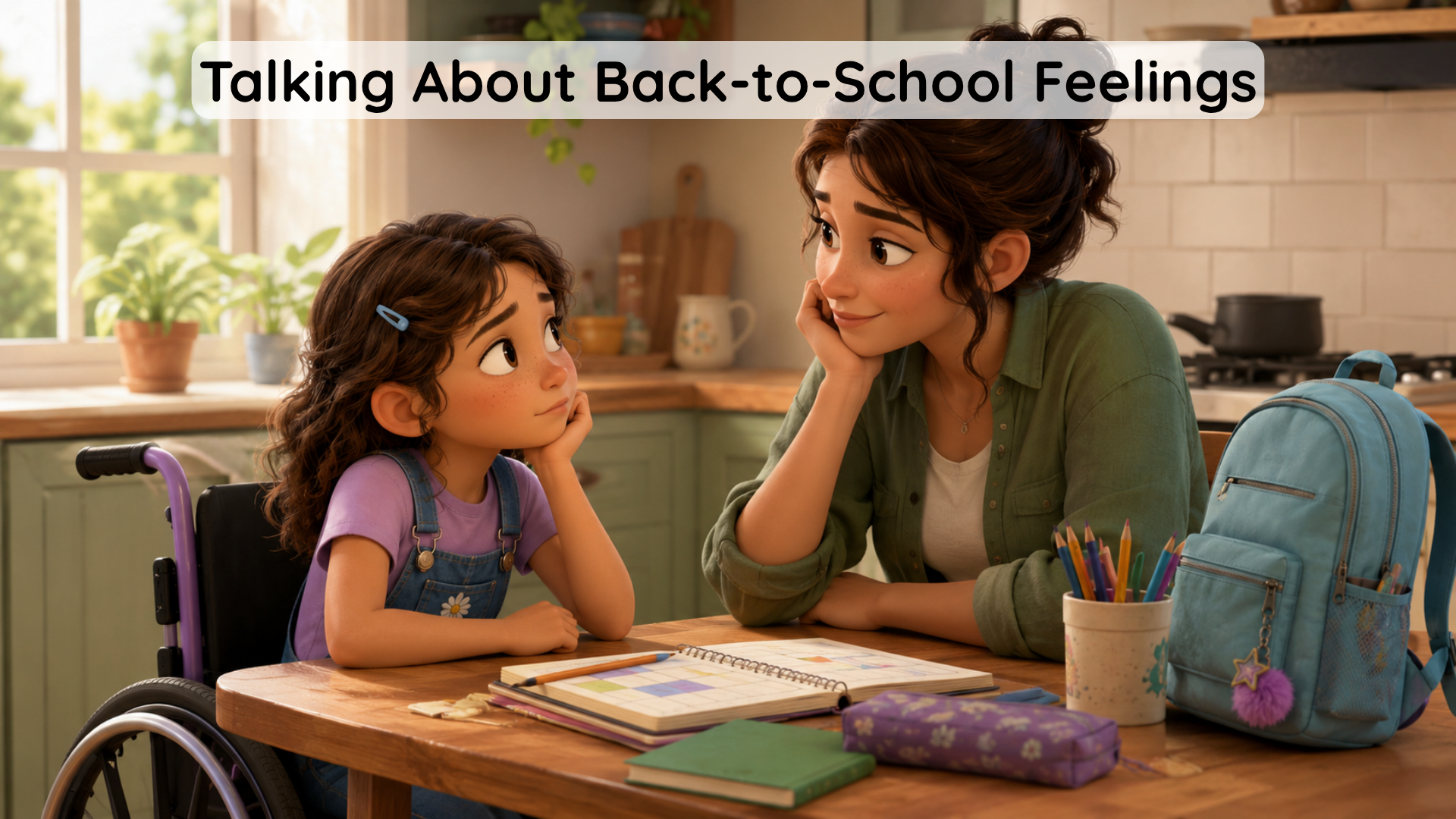
Going back to school can bring many different feelings for children. Some may feel excited to see friends, meet a new teacher, or learn new things. Others may feel worried, scared, sad, or overwhelmed. For children with mental health needs, trauma, or disabilities, returning to school may be especially difficult.
One of the best things a parent or caregiver can do is ask, “How do you feel about going back to school?” This simple question shows your child that their feelings matter. It also gives them a chance to talk about worries they may not know how to bring up on their own.
Children may worry about loud classrooms, new routines, schoolwork, bullying, making friends, or being away from home. A child with trauma may feel unsafe when there are sudden changes, crowded spaces, or unfamiliar adults. A child with a disability may worry about getting the help they need, keeping up with classmates, or being treated differently.
When parents listen carefully, they can learn what is making the child nervous. This can help the family prepare before school begins. For example, a child who is worried about finding the classroom may feel better after visiting the school. A child who is nervous about a new teacher may benefit from meeting the teacher early. A child who becomes overwhelmed may need a quiet place or a calm-down plan during the school day.
Try to ask questions that cannot be answered with only “yes” or “no.” You might ask:
“How do you feel when you think about school?”
“What are you looking forward to?”
“Is there anything you are worried about?”
“What would help you feel safer or more comfortable?”
It is important not to quickly dismiss your child’s feelings. Saying, “There is nothing to worry about,” may make a child feel like they should stop talking. Instead, try saying, “I understand why that might feel scary,” or “Thank you for telling me.” You do not have to fix every problem right away. Sometimes children simply need a trusted adult to listen.
These conversations can also help parents know when to contact the school. Teachers, counselors, special education staff, and other support workers may be able to help with changes, accommodations, or extra emotional support. Sharing concerns early can prevent small problems from becoming bigger ones.
Keep checking in after school starts. A child’s feelings may change once they begin attending classes. Ask how the day went, what felt hard, and what went well. Watch for changes in sleep, eating, mood, behavior, or interest in school.
Asking your child how they feel creates trust. It lets them know they are not alone and that it is safe to talk about difficult emotions. Whatever the situation, make sure the child has time to process the questions and doesn’t rush the response. When children feel heard, supported, and prepared, they may have an easier time adjusting to the new school year.
Advocacy Links helps families find resources and support for children with mental health needs, trauma, and disabilities.