
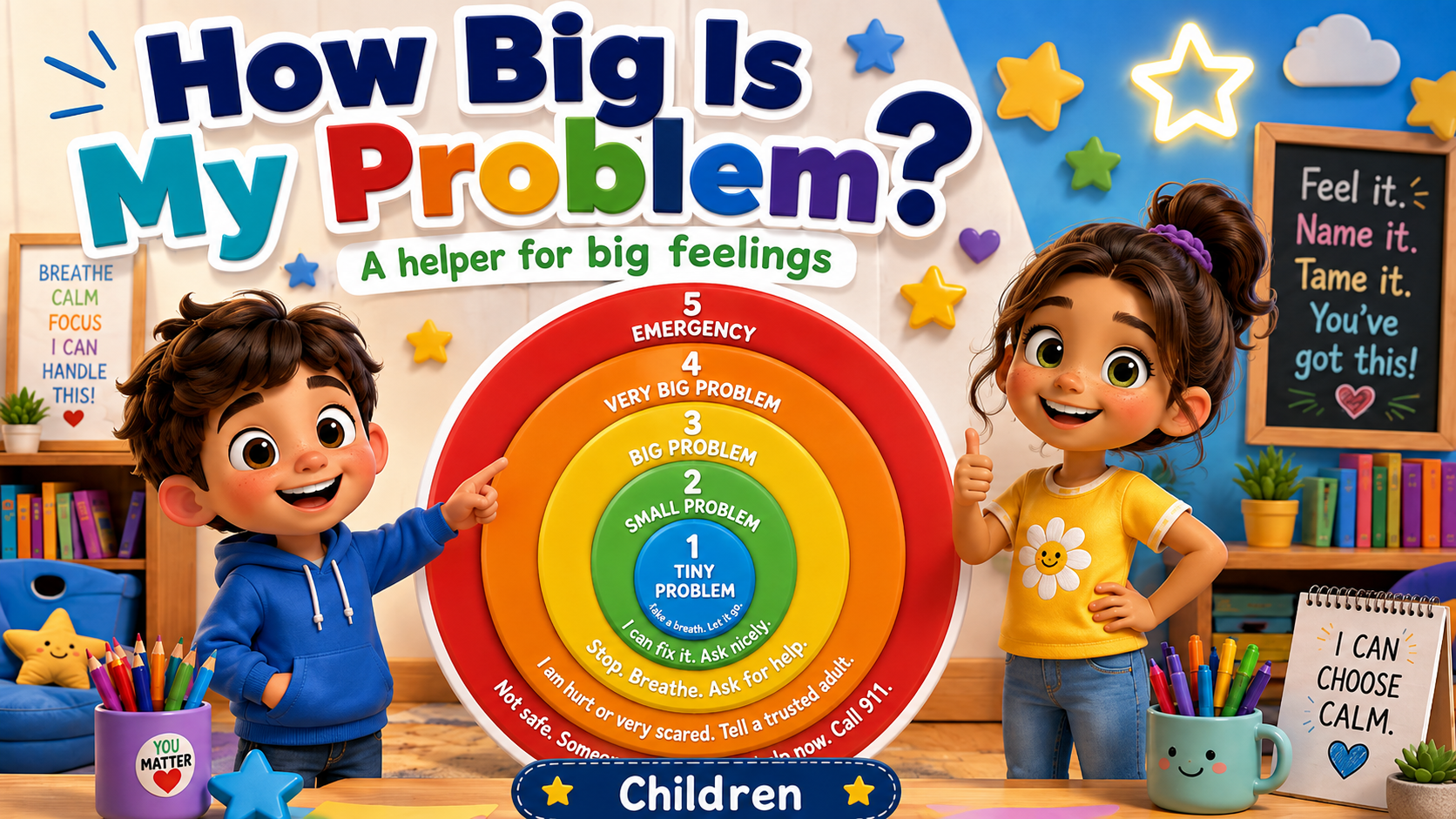
How to Use the “How Big Is My Problem?” Chart – Free Printable
A simple guide for helping young children sort out strong feelings and choose a safe next step.
Simple Instructions
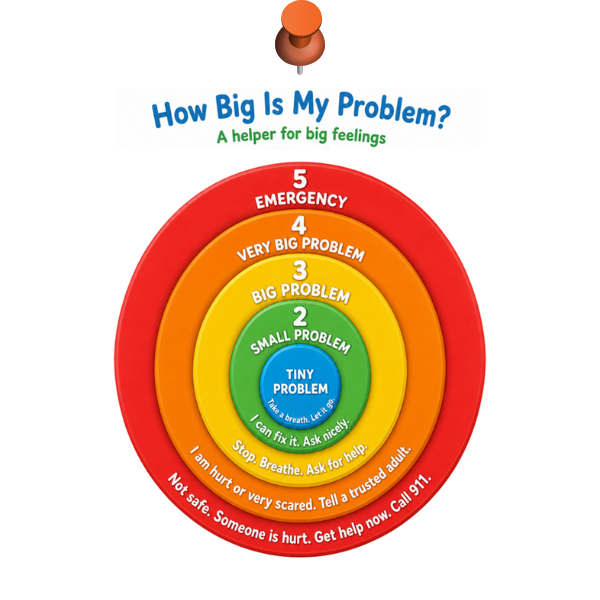
1. Look together. Use the chart during a hard moment, or practice with it when the child is calm.
2. Ask what happened. Keep your voice calm. Let the child point, talk, or show you what happened.
3. Start in the middle. Begin with the blue circle and move outward until the problem seems to fit.
4. Pick one circle. The child does not have to get it “perfect.” Help them choose the closest match.
5. Read the action. Read the words on that circle together and try the next step it gives.
6. Check again. After the child is calmer, ask if the problem feels the same size or if they need more help.
Free Printable Downloads Links
How Big Is My Problem
Simple Instructions How Big Is My Problem
Example Situations for Children How Big Is My Problem
Example Situations for Children
Use these as examples, not strict rules. The size of a problem is about safety and how much help is needed — not how big the child’s feelings are. A “tiny” problem can still bring a very big feeling. If a child feels unsafe or cannot stay safe, treat it as a bigger problem and get adult help.
-
Emergency
Get help now. Call 911 when needed.
- There is a fire, heavy smoke, or another dangerous emergency.
- Someone is badly hurt, cannot wake up, or is having trouble breathing.
- The child is lost and cannot find a trusted adult or a safe place.
- Someone is trying to seriously hurt the child or another person.
- The child feels they cannot keep themselves or someone else safe.
-
Very Big Problem
Tell a trusted adult right away.
- The child is hurt and may need medical attention, but it does not seem life-threatening.
- The child is extremely scared and cannot calm down without adult help.
- Another child is threatening, bullying, or frightening them and they do not feel safe handling it alone.
- The child cannot find their parent, teacher, or caregiver in a familiar public place.
- Something serious happened at school or home and the child needs an adult to step in now.
-
Big Problem
Stop. Breathe. Ask for help.
- The child has a strong argument with a friend or sibling and cannot solve it alone.
- An important school item is lost, damaged, or left at home.
- The child misses the bus, gets separated from their group, or does not know what to do next.
- The child is very upset about a change in plans and needs help making a new plan.
- The child feels overwhelmed, angry, or anxious and needs an adult to help them calm down.
-
Small Problem
Try to fix it. Ask nicely.
- A drink spills or something small makes a mess.
- The child loses their place in line or someone goes ahead of them.
- A pencil breaks, a crayon is missing, or they do not have the supply they wanted.
- A sibling or classmate is using something the child wanted to use.
- The child makes a small mistake on homework, a game, or a classroom activity.
-
Tiny Problem
Take a breath. Let it go.
- The child gets a different color cup, plate, pencil, or paper than they wanted.
- Someone sits in the seat the child wanted.
- The child has to wait a few minutes for a turn.
- The child does not get to choose the game, show, or activity this time.
- A small plan changes, such as having a different snack or doing an activity in a different order.
| Helpful reminder for adults: Do not argue with a child about the number they choose. Ask, “What happened?” and “What help do you need?” Then help them decide whether the problem is about danger, needing adult help, or something they can handle with a coping skill. |
Free Printable Downloads Links
How Big Is My Problem
Simple Instructions How Big Is My Problem
Example Situations for Children How Big Is My Problem