

Helping Your Child Talk About Going Back to School
A Parent Guide for Using the Back-to-School Feelings & Support Plan
Download Free Worksheet
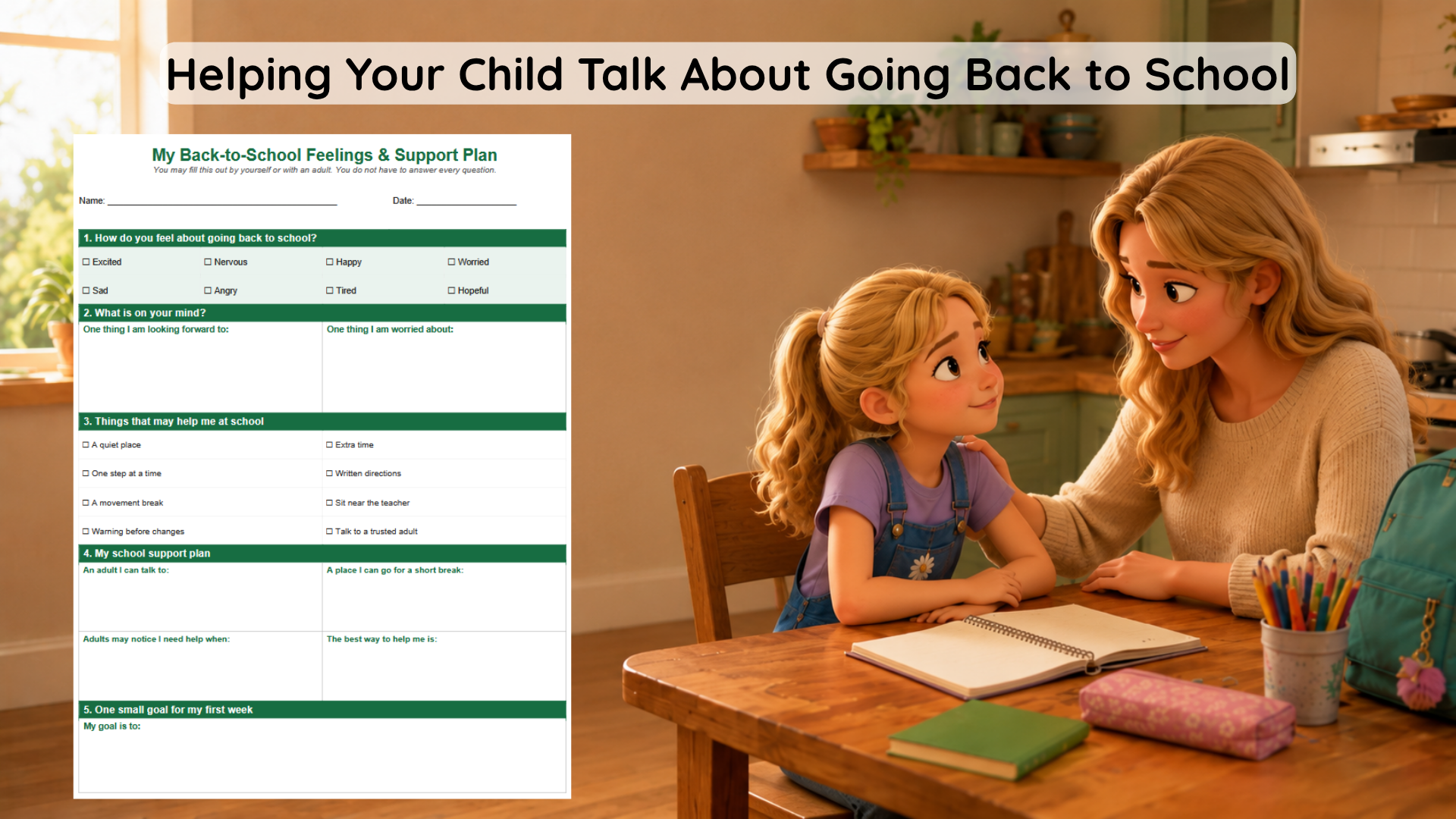
Going back to school can bring many feelings. A child may feel excited, worried, sad, angry, or unsure. Children who live with anxiety, depression, ADHD, autism, trauma, mood disorders, or other mental health challenges may have an especially hard time explaining what they need. The Back-to-School Feelings & Support Plan gives your child a simple way to share feelings, worries, and ideas that may make school easier.
Choose a Calm, Low-Pressure Time
Do not begin the worksheet during an argument, a rushed morning, or right after a difficult school day. Try sitting together after a snack, while coloring, or during another quiet activity. Tell your child there are no wrong answers and that the sheet is not a test. Your child may complete the whole page, answer only a few questions, point to choices, or ask you to write the answers.
Let Your Child Stay in Control
Some children need time before they are ready to talk. Let your child skip a question or come back to it later. Avoid pushing for details about trauma or upsetting experiences. The goal is to help your child feel heard and supported, not to make them explain everything. You can also complete the worksheet over several short conversations instead of doing it all at once.
Simple Ways to Help Your Child Open Up
|
• “What part of school feels easiest to think about?” • “What part feels the hardest?” • “What could an adult at school do to help?” • “Would you rather tell me, point to it, or write it down?” • “Is there anything you wish your teacher understood?” |
Another helpful idea is to answer one of the questions yourself first. For example, you might say, “When I start something new, I sometimes worry that I will forget something.” This shows your child that talking about feelings is normal.
Listen Before Trying to Fix the Problem
When your child shares a worry, begin by listening. You might say, “That makes sense,” “Thank you for telling me,” or “We can think about this together.” Try not to quickly say, “You will be fine,” because the child may feel that the worry is being dismissed. After listening, ask whether your child wants comfort, help making a plan, or simply someone to hear them.
Use the Answers to Make a School Plan
The worksheet may show that your child needs a quiet place, clear directions, movement breaks, warning before changes, extra time, or a trusted adult to check in with. Parents can use this information when speaking with a teacher, counselor, school social worker, or special education team. Share only the information that is helpful and that your family is comfortable sharing. The worksheet can support a conversation, but it does not replace an IEP, 504 Plan, safety plan, counseling, or medical care.
Check In Again After School Starts
A child’s needs may change after the first few days or weeks. Return to the sheet and ask what is going well, what is still hard, and whether a different support might help. Notice small successes, such as asking for help, entering the classroom, using a calming strategy, or making it through a difficult part of the day. Praise effort instead of expecting everything to improve at once.
Important: If your child talks about hurting themselves, hurting someone else, or not feeling safe, take it seriously and contact a mental health professional, the school, or emergency help right away.
Download Free Worksheet
This worksheet was created by Advocacy Links who helps families find resources and support for children with mental health needs, trauma, and disabilities.